

Our Patron Saint: Saint Agnes of Rome
Born: 291
Died: 305
Feast Day: January 21
Saint Agnes of Rome, the patron saint of our parish, was born in 291 to a Christian family in Rome—just a couple of centuries after the life of Jesus. She grew up during a rare time when Christians were allowed to practice their faith openly thanks to an edict from Emperor Gallienus. This brief season of peace allowed Christianity to grow throughout the Roman Empire and the Mediterranean world.
From an early age, Agnes felt a deep love for God and dedicated her life to Him. One beautiful quote attributed to her captures her devotion: “Christ made my soul beautiful with the jewels of grace and virtue. I belong to Him whom the angels serve.”
Sadly, Agnes’ young life took a difficult turn. In 303, Emperor Diocletian ended the period of Christian tolerance and began what is known as the Great Persecution. Not long after, a young Roman suitor—angry that Agnes would not marry him—reported her as a Christian. To prove her loyalty to Rome, she was ordered to sacrifice to the Roman gods. Agnes refused, staying true to her faith, and was sentenced to death.
Because Roman law forbid the execution of virgins, she was instead taken to a brothel. Even there, Agnes’ faith never wavered. Tradition tells us that several miraculous events protected her purity: men who attempted to harm her were struck blind, and one was healed after Agnes prayed for him. When authorities tried to bind her, the shackles would not close around her small wrists, and even the wood prepared for her execution would not burn. Finally, an officer ended her life by the sword. Saint Agnes was martyred in 304 at just thirteen years old.
Today, Saint Agnes is honored as the patron saint of girls, young women, chastity, survivors of assault, gardeners and crops, betrothed couples, Girl Guides, the Children of Mary, the Colegio Capranica of Rome, and the Diocese of Rockville Centre in New York.
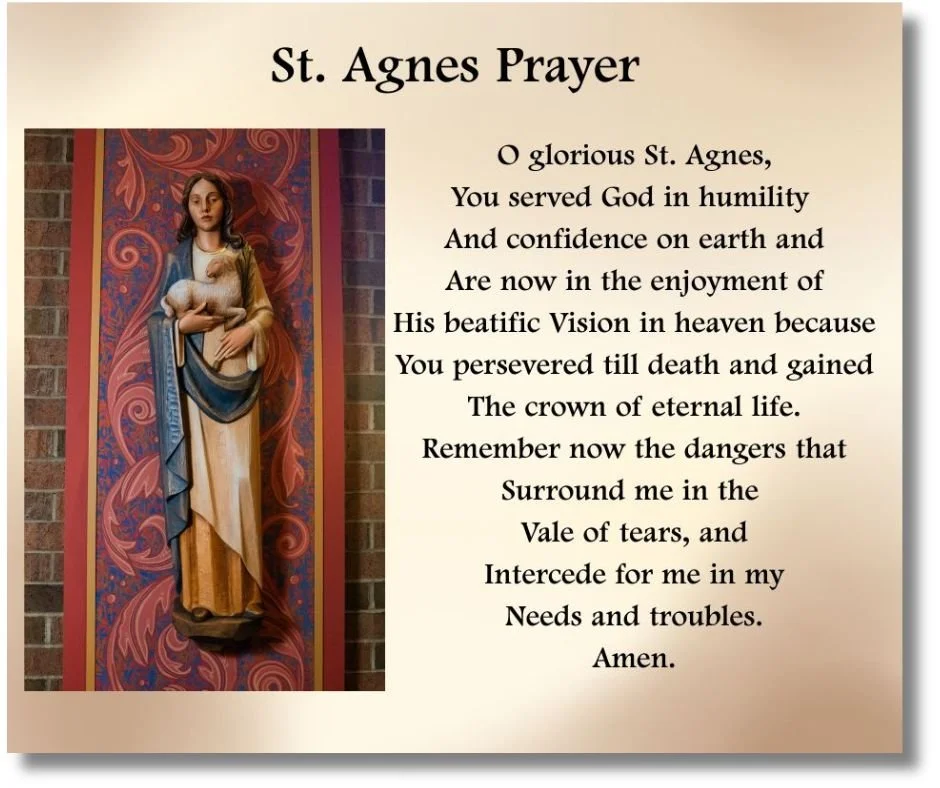
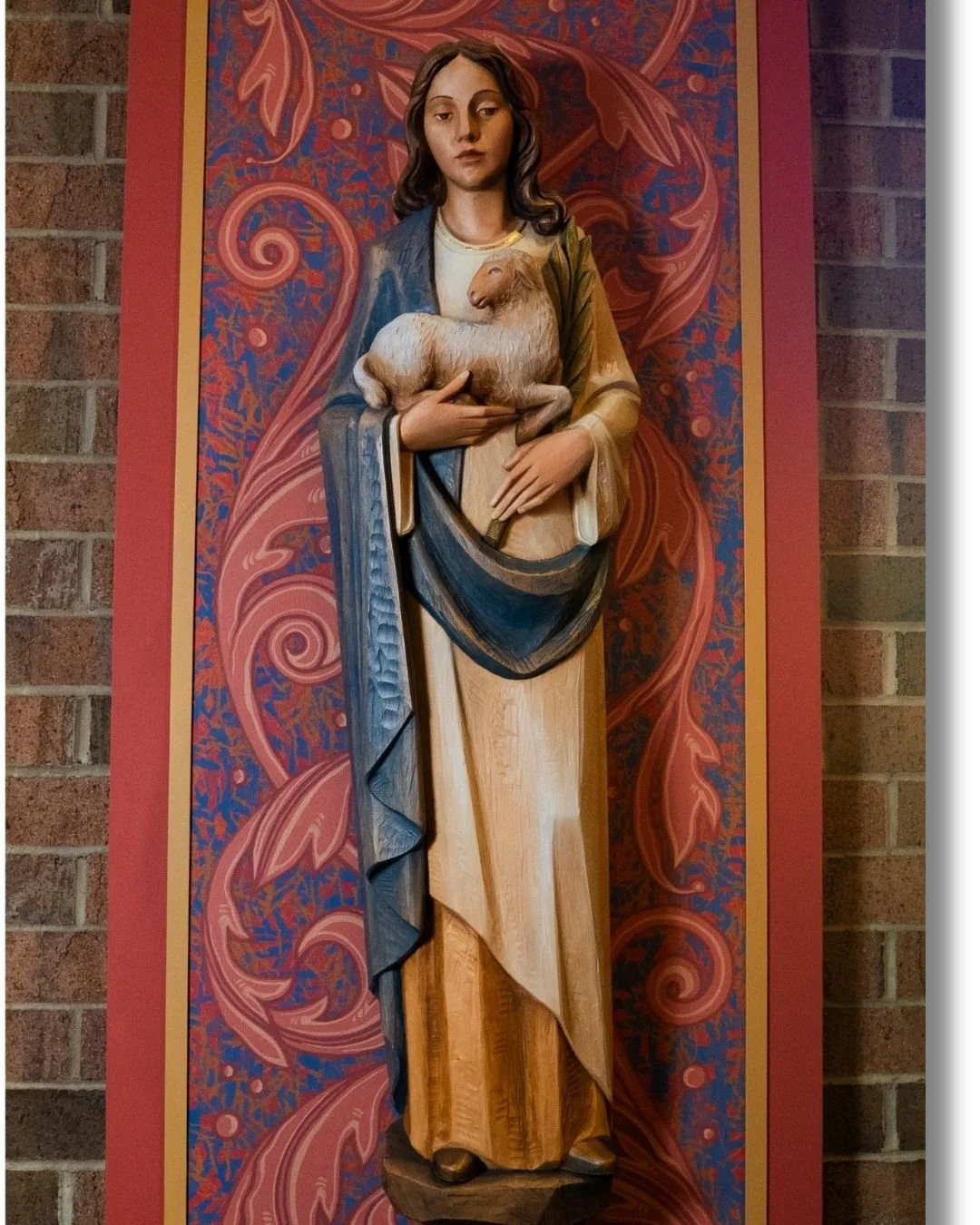
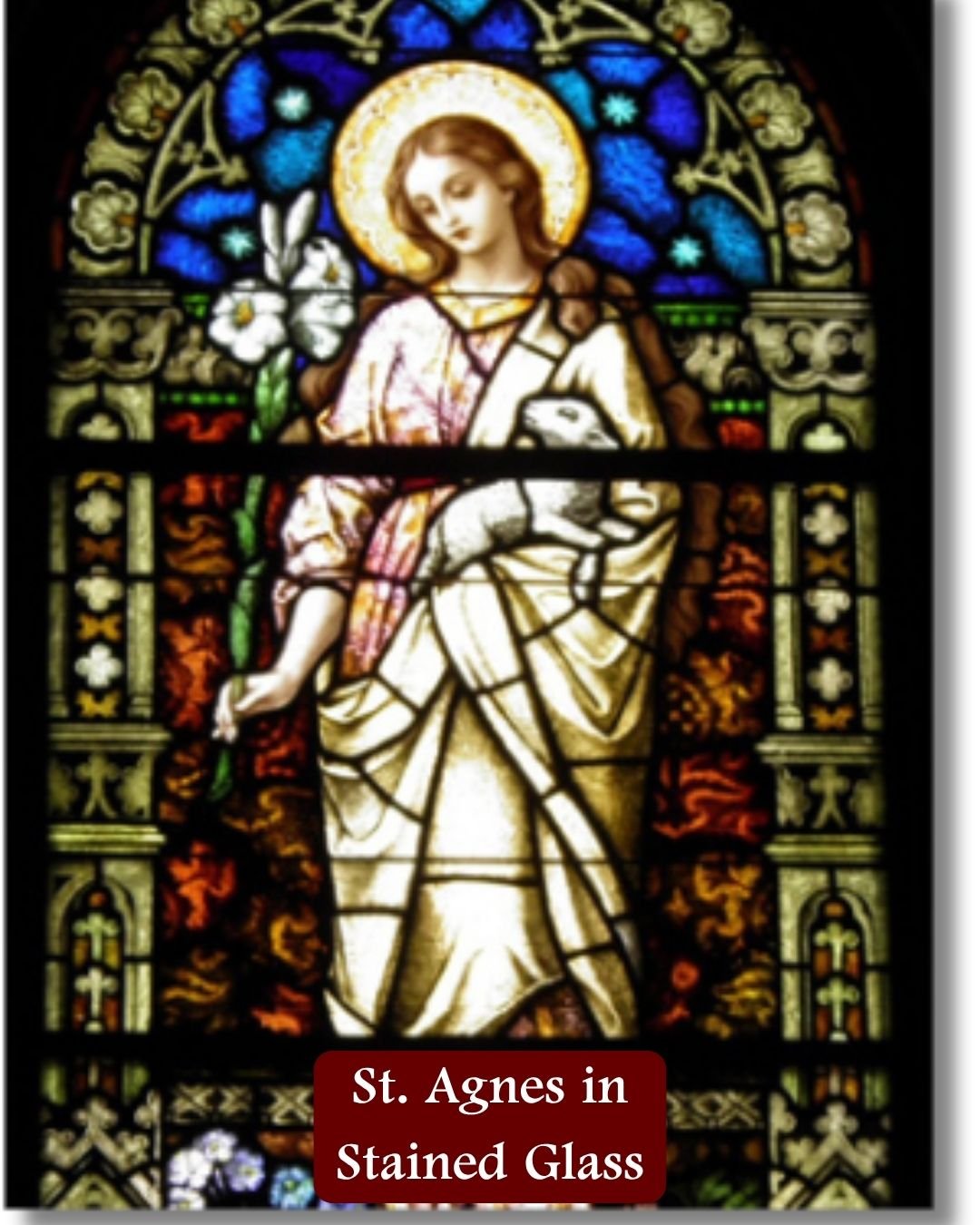
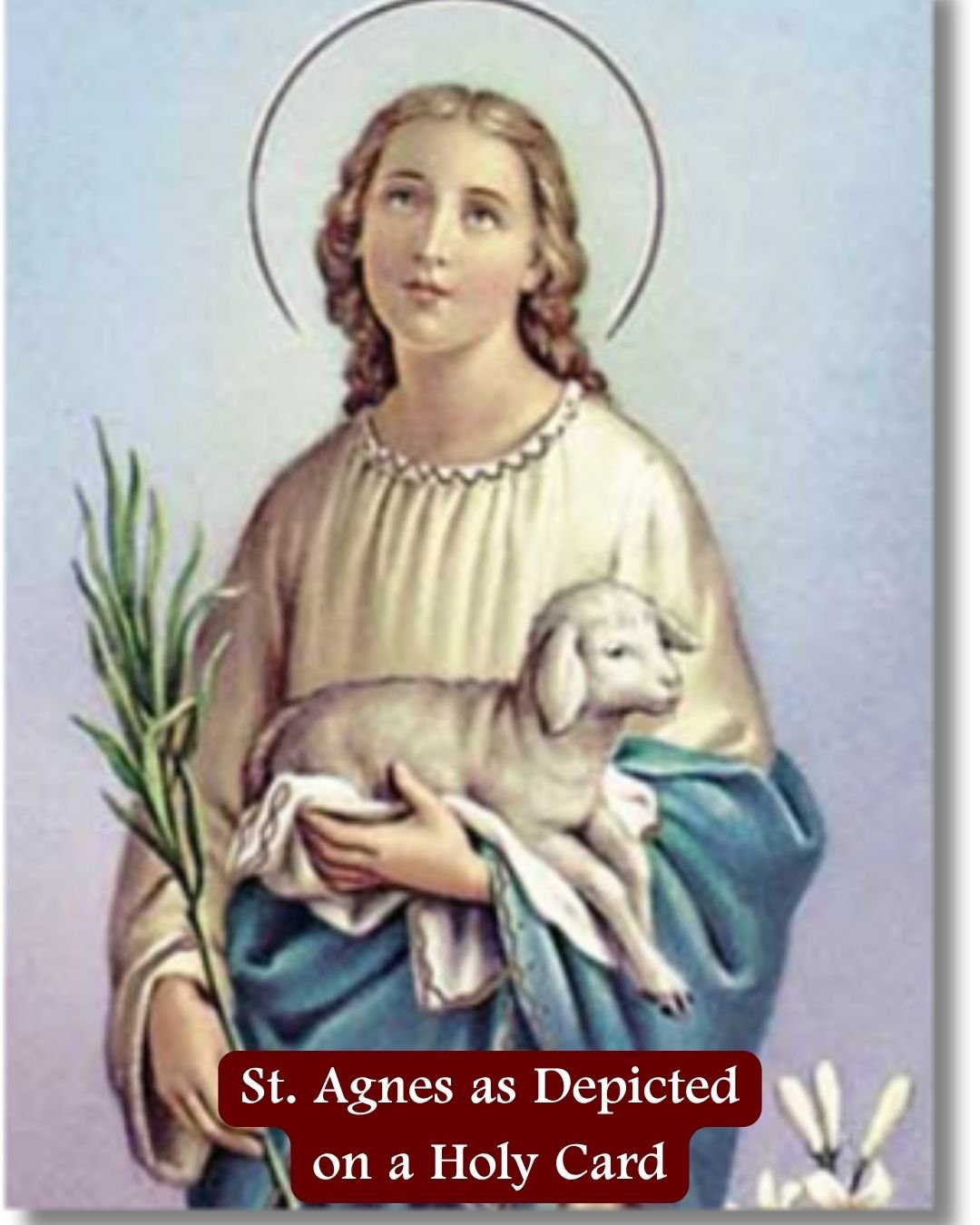
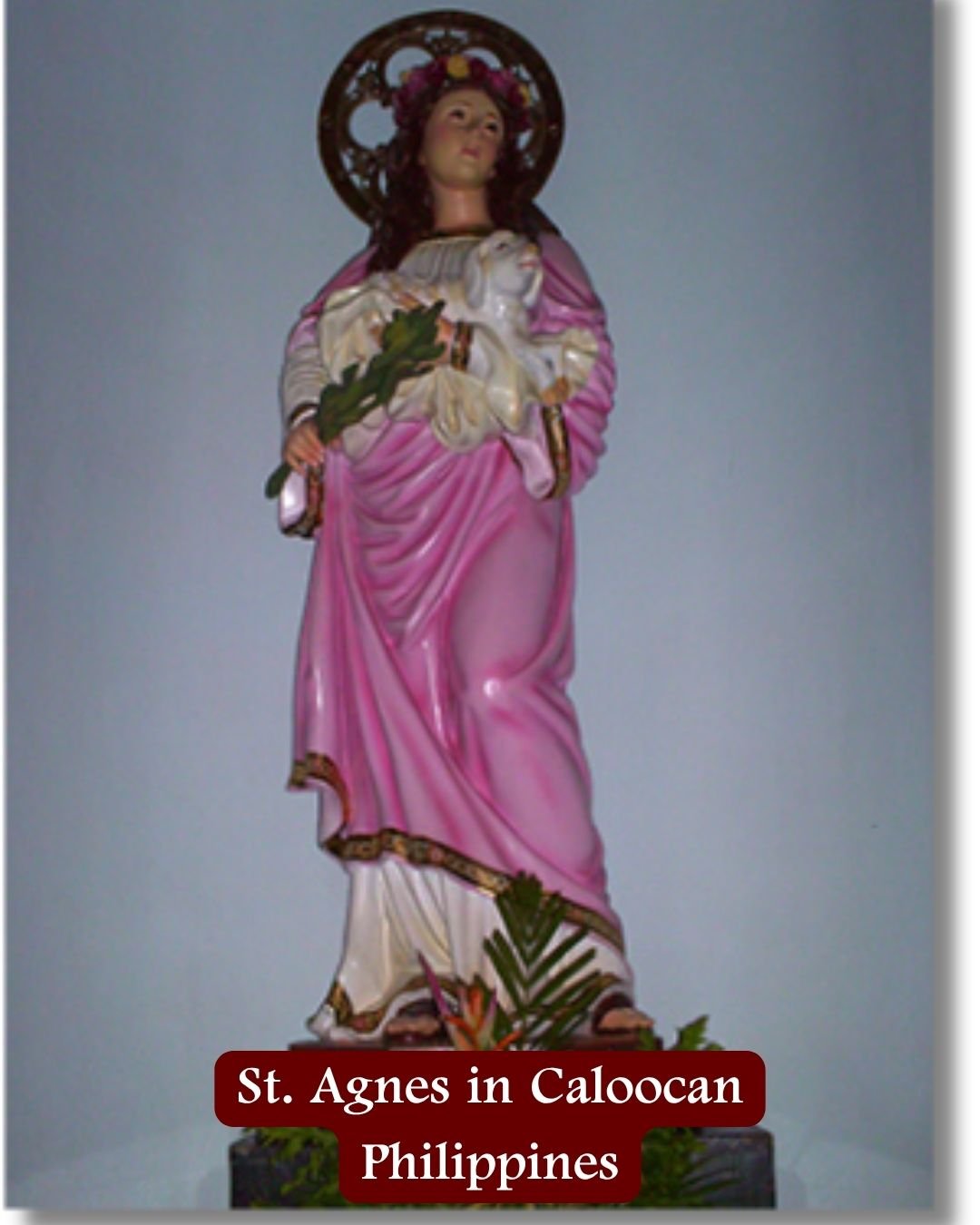
Saint Agnes is often depicted with a lamb, a symbol of purity and a reference to the Latin word agnus, meaning “lamb.” Many images also show her holding a palm branch, a sign of martyrdom and victory in Christ.
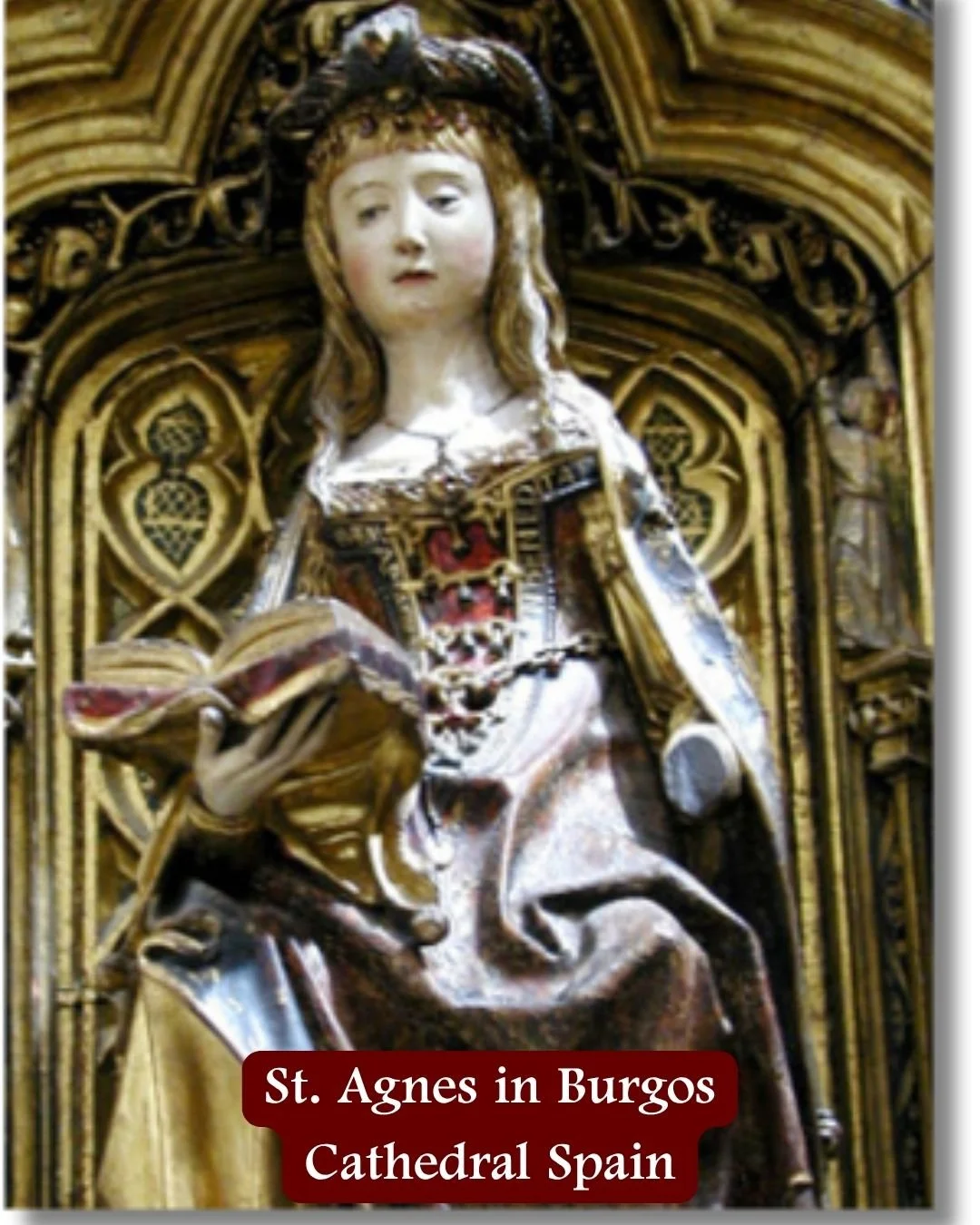
Pictures of Saint Agnes
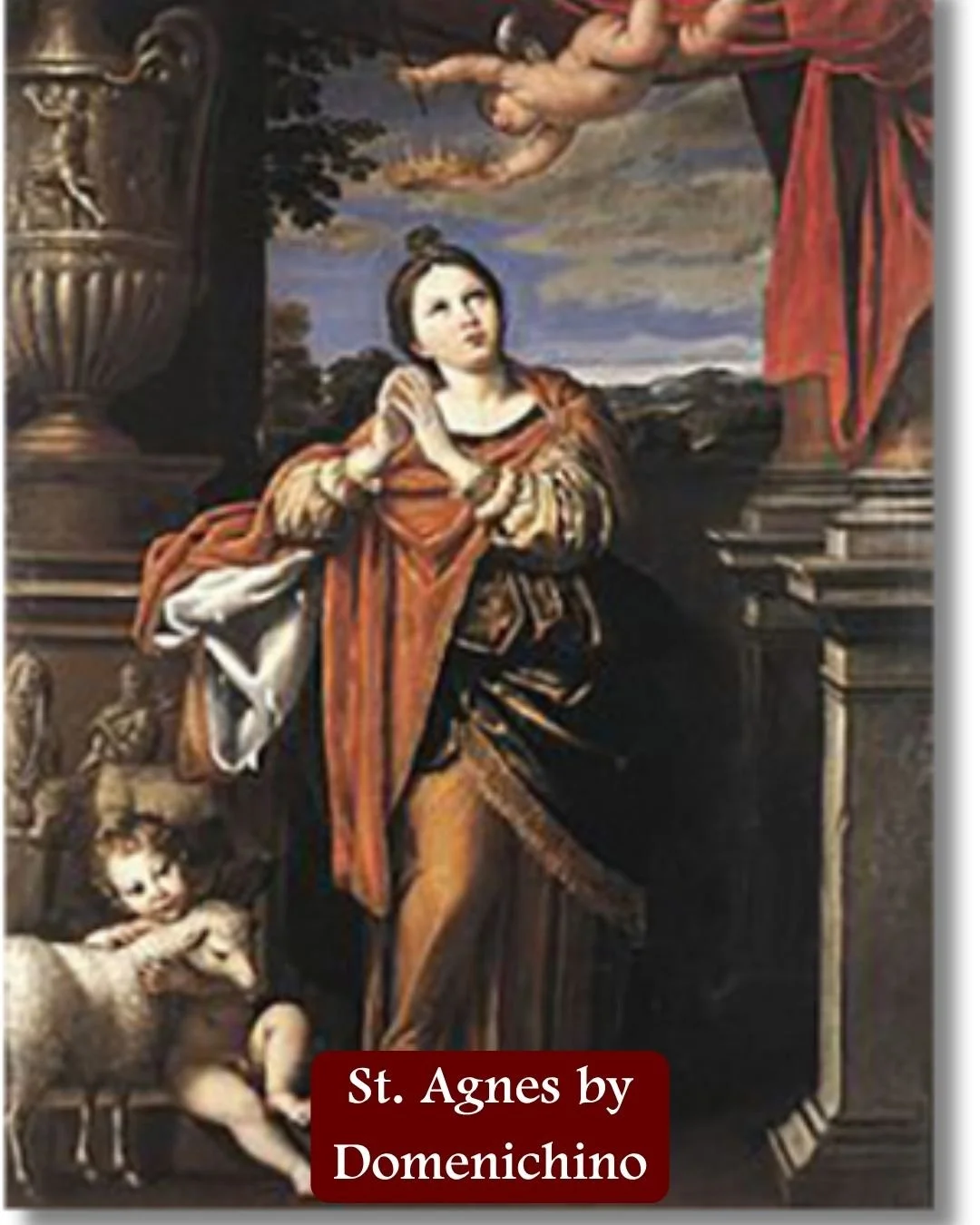
Devotion to Saint Agnes Through the Centuries
-
Saint Agnes’ life and martyrdom inspired generations of believers. Her courage and purity have left a lasting mark on the Church and the world, influencing saints, writers, and everyday Catholics alike.
-
Just days after Agnes’ death, her foster-sister Emerentiana was found praying at her tomb. When she refused to leave and defended Agnes’ memory, she was martyred as well. Later, in the 4th century, Constantia, daughter of Emperor Constantine, built a basilica over Agnes’ tomb after being healed of leprosy. Today, her remains are preserved in the Basilica of St. Agnes in Rome’s Piazza Navona.
-
Saint Agnes is one of only seven women mentioned by name in the Roman Canon of the Mass. On her feast day, two lambs from the Trappist abbey of Tre Fontane are blessed by the Pope. Their wool is woven into the pallium, a symbol of unity given to newly consecrated metropolitan archbishops.
-
The Congregation of Sisters of St. Agnes, founded in 1858 in Wisconsin, carries on her legacy, serving those whose faith or dignity is at risk. Her story has also inspired writers, poets, and playwrights for centuries, including St. Ambrose, Prudentius, Hrotsvitha, and John Keats.
-
During the Middle Ages, St. Agnes’ feast inspired customs for unmarried young people seeking guidance about future spouses, including fasting, dreaming rituals, and symbolic gestures with rosemary or grain.
-
Saint Agnes is honored in the Roman Catholic Church, Eastern Orthodox Church, Anglican Communion, and Lutheranism. Hundreds of churches and schools bear her name, including several in the U.S.: West Mifflin, Pittsburgh, West Chester, Arlington, Nashville, and Phoenix.

Veneration of Saint Agnes at Our Church
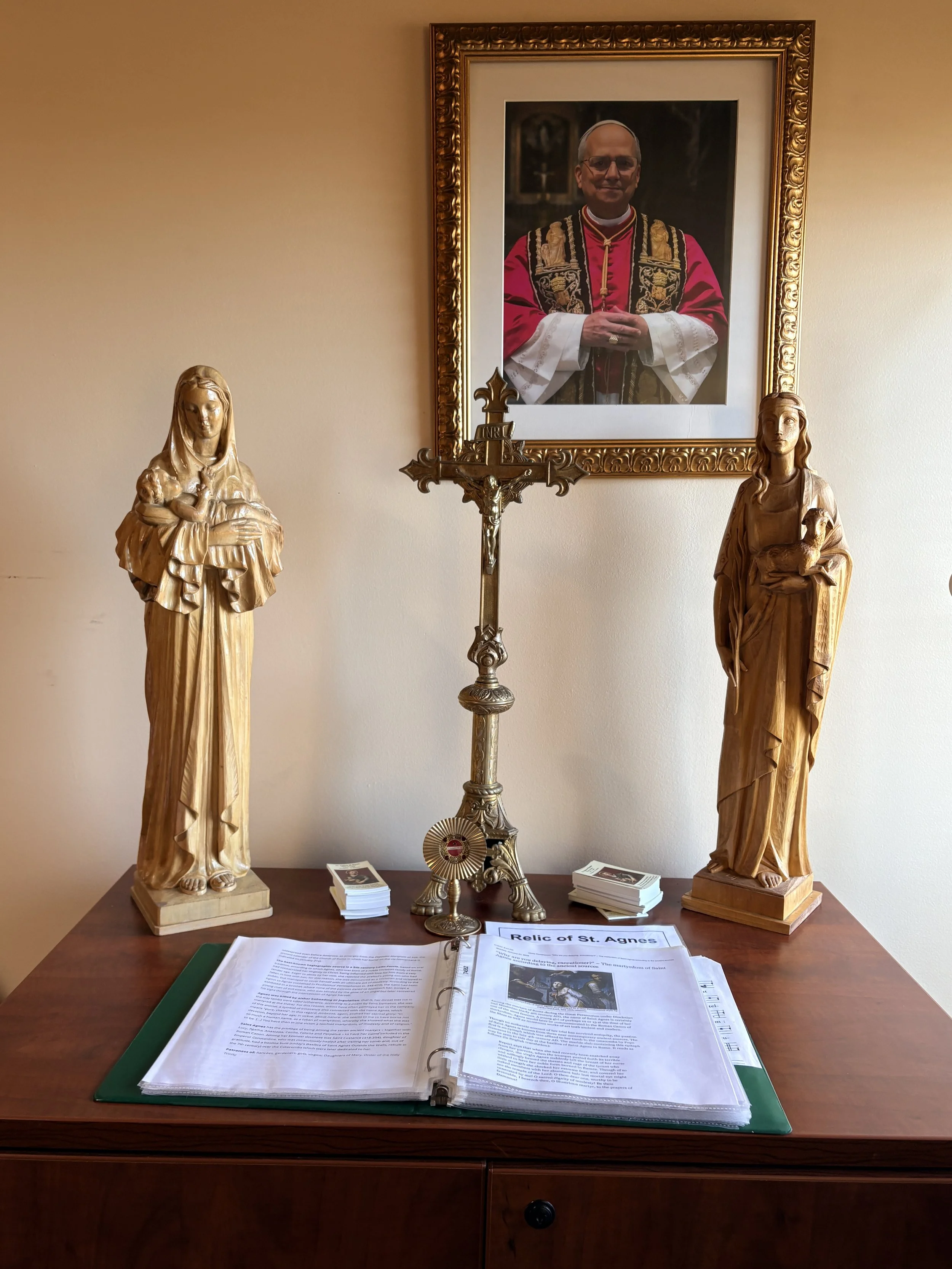
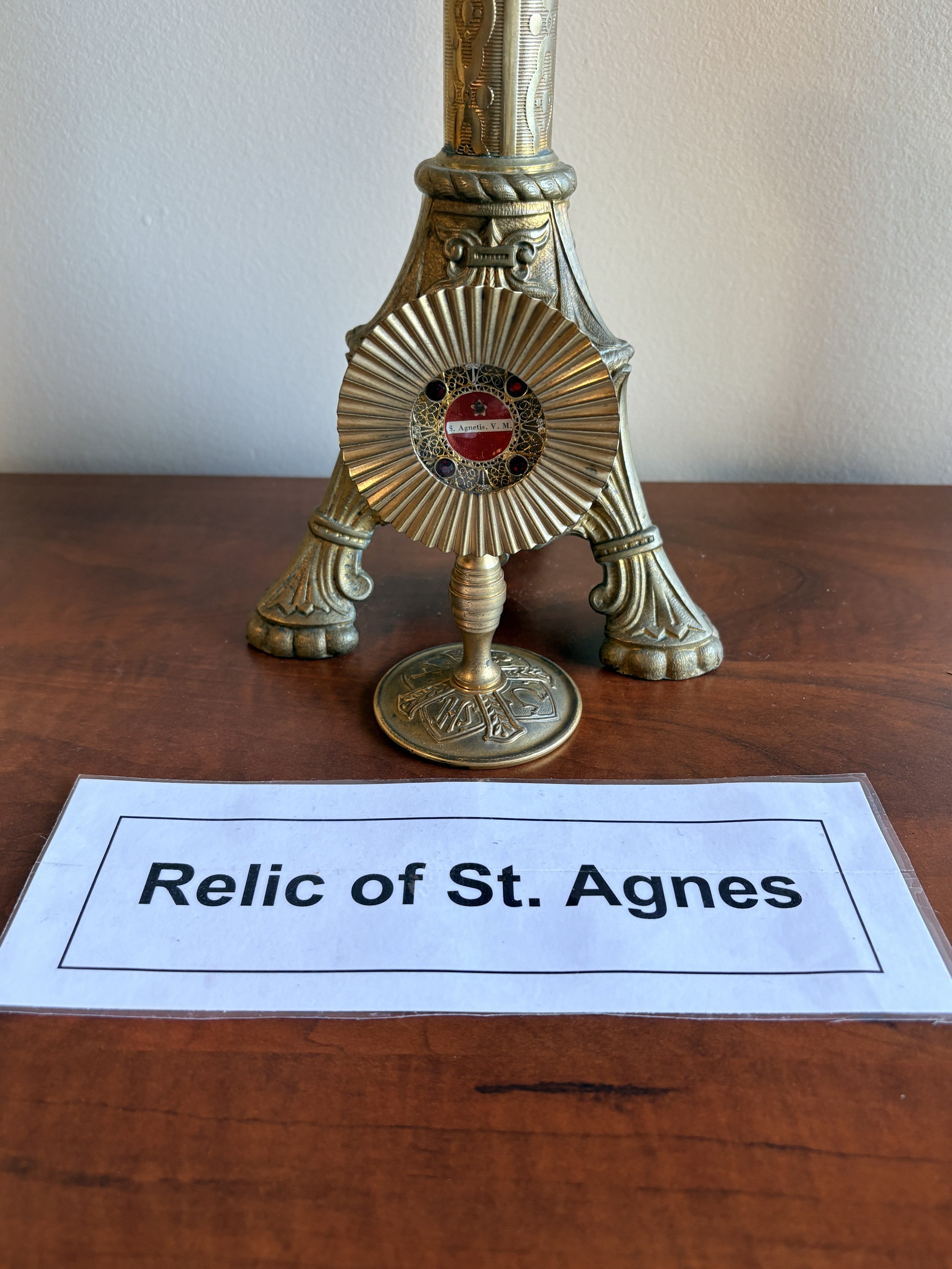
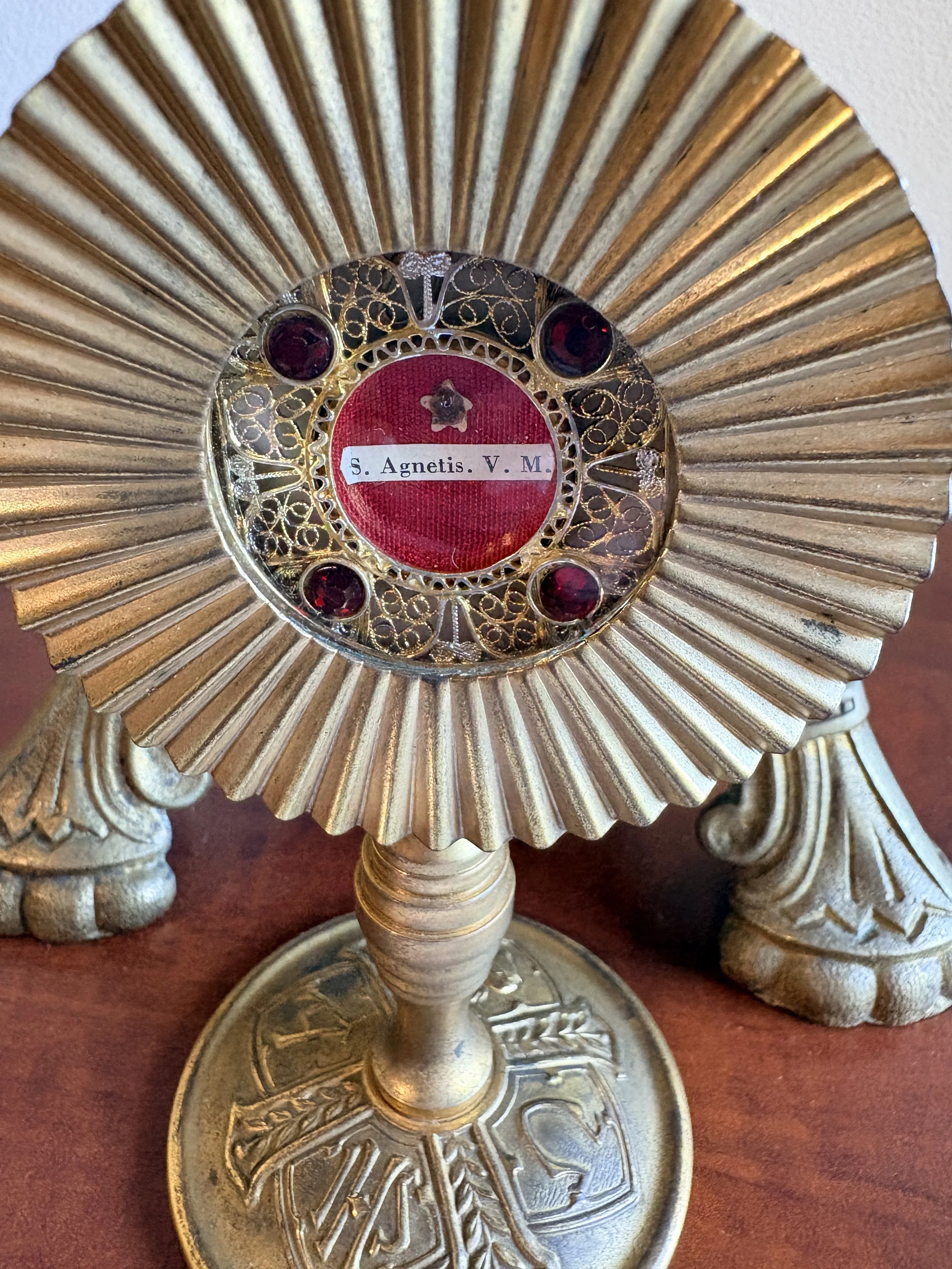
We invite you to visit the church office, where additional information about St. Agnes and a relic of the saint are available. This is a special opportunity to learn more about her life, faith, and devotion to God while honoring her lasting legacy in the Catholic Church.
Veneration: Veneration is the deep respect, honor, and reverence Catholics show to saints, holy angels, sacred relics, and sacred images. It is important to understand that veneration is not the same as worship (latria), which is reserved for God alone.
Relics: Relics are sacred objects connected to saints that Catholics honor as reminders of their holy lives and devotion to God. They are traditionally divided into three classes: first-class relics are physical remains of a saint, second-class relics are items the saint owned or used, and third-class relics are objects that have been touched to a first- or second-class relic. Venerating relics is a meaningful way for Catholics to honor the saints, strengthen their faith, and deepen their connection to the Church's spiritual traditions.
Definitions Source: USCCB
Prayers Invoking Saint Agnes